
Senkele Swaynes Hartebeest Sanctuary Safari

Authentic Senkele Swaynes Hartebeest Sanctuary Safari Tours

Experience Senkele Swaynes Hartebeest Sanctuary, Beyond Your Imagination

We design immersive, nature‑driven safaris at Senkele Swayne’s Hartebeest Sanctuary, backed by more than a quarter‑century of experience and strong local partnerships. Every journey is crafted to make a difference—for you, for the land, and for the people who call this area home.

25+ years of expertise in 15 Africa Countries

1000+ thoughtfully selected travel partners

200,000+ travellers, many of whom return year after year

Years Crafting Personalised African Safaris
0
Client Reviews at 5 Stars on Feefo
0
Globally Recognised Travel Awards Won Last Year
0
Travellers, Many Returning Year After Year
0
Travellers, Many Returning Year After Year
0

Interested to know more? Click the link to find out all about Exodussafaris Big 5 Guarantee

Why Travel With Exodussafaris?

25 Years of Safari Expertise ​

With 25 years’ experience, we tailor African safari journeys using our intimate knowledge of the land and close ties to its communities.

We Know Because We Go

Our deep roots in East Africa mean we’ve explored every region, stayed in every lodge, and discovered each hidden gem — and we pass that insight on to you.

24/7 Support

From day one until you return, our support is constant. Thanks to the trusted relationships we’ve built on the ground, partners will go the extra mile just like we do.

Every Adventure Makes a Difference ​

As part of the Nawiri Group, each trip contributes toward preserving ecosystems and empowering local communities to flourish.

Complete Financial Protection

We offer complete financial protection so your investment is safe. Your journey is protected from start to finish.

World-Class Recognition, Trusted by Travellers​

We’ve earned recognition from Condé Nast Traveler, Travel + Leisure, and the World Travel Awards — but above all, it’s the stories from our travellers that matter most.
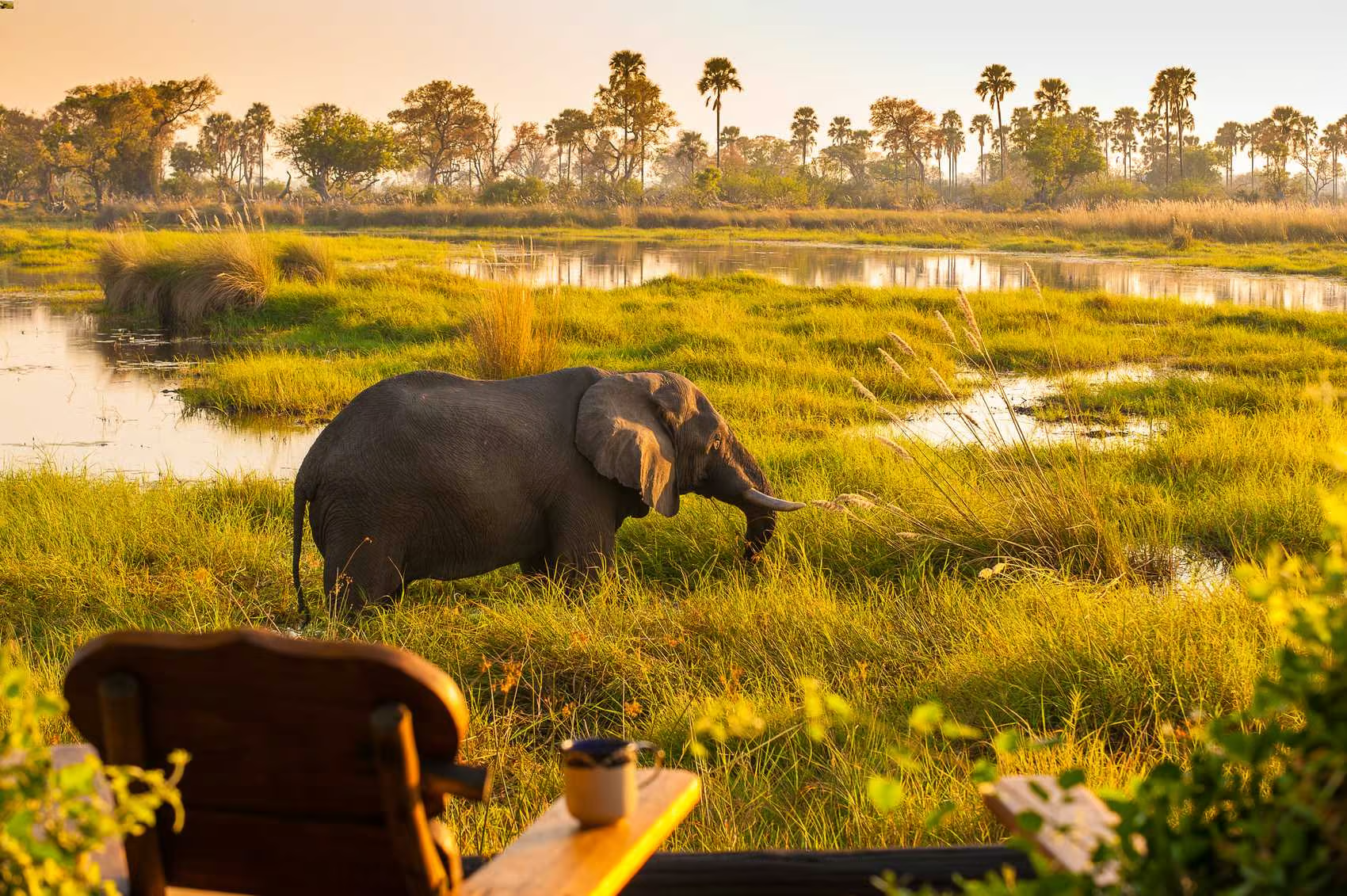
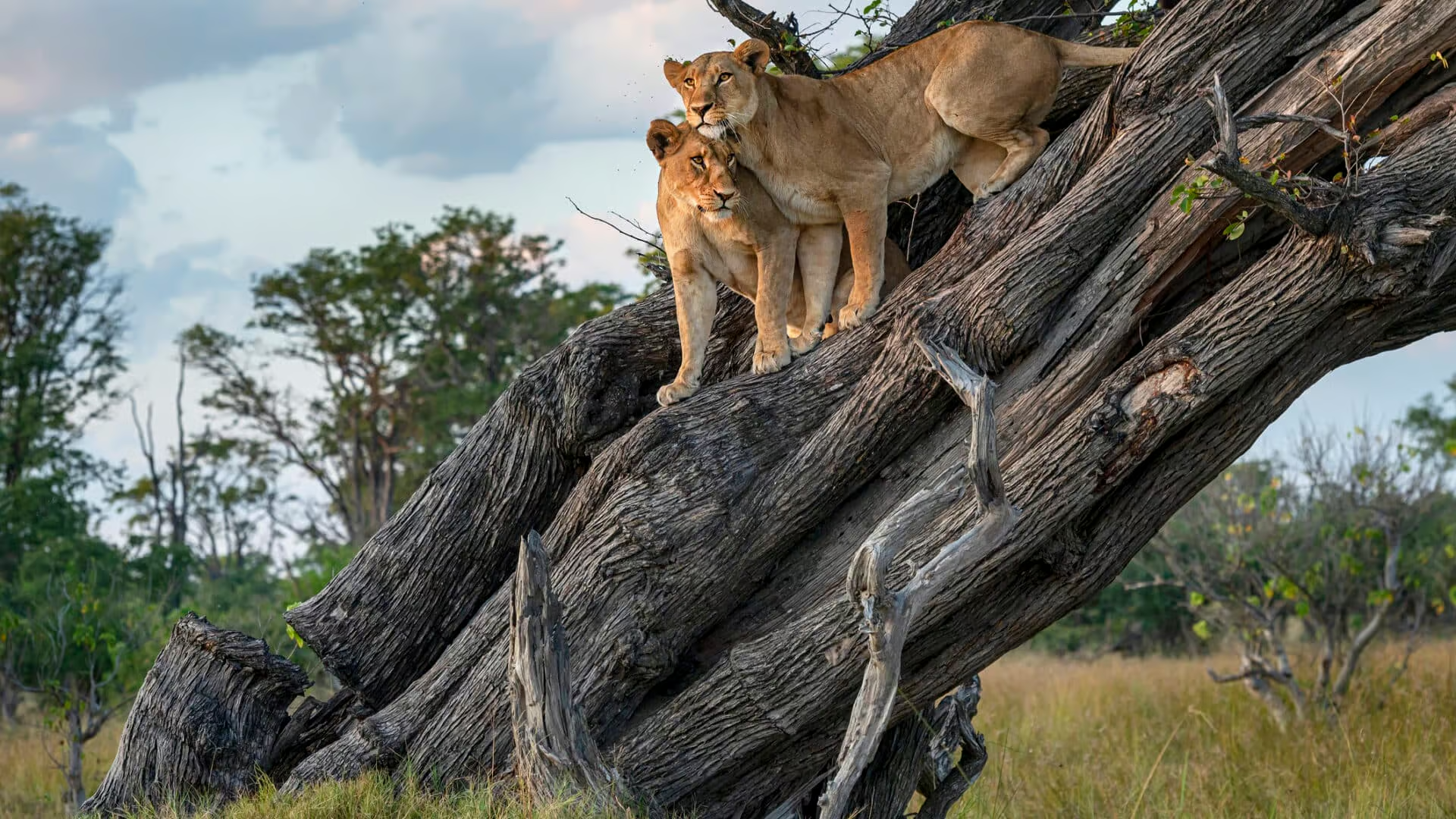
Senkele Swaynes Hartebeest Sanctuary Gallery

Slide 4
Slide 3
Slide 2
Slide 1

Where To Go In Senkele Swaynes Hartebeest Sanctuary

Senkele Swayne’s Hartebeest Sanctuary is dotted with many special spots — here are 15 to draw you in, each offering its own slice of discovery:

Central Kalahari Game Reserve ahh1

One of the largest game reserves in the world, the Central Kalahari Game Reserve (CKGR) is a remote and pristine safari destination in Botswana that inspires a sense of freedom... ahpar1

Chief’s Island ahh2

Located in the Moremi Game Reserve, Chief’s Island is the largest island in Botswana’s famed Okavango Delta, offering travellers a truly unique safari experience in southern Africa. This landmass measures... ahpar2

Chobe National Park and Savuti Marsh ahh3

Chobe National Park is Botswana’s most biologically diverse park, meaning that it’s a haven for wildlife. This makes it a must-visit destination in southern Africa for Botswana safari goers. From... ahpar3

Khwai ahh4

Situated in the northeastern region of the Okavango and bordering Moremi Game Reserve, Khwai offers exceptional wildlife viewing and a stunning array of ecosystems to explore. From lagoons and flooded... ahpar4

Kubu Island ahh5

Kubu Island is a must-visit destination during a Botswana safari for those looking for an off-the-beaten-track adventure. Rising up from the flat landscape and among baobab trees, these granite rocks. ahpar5..

Mababe ahh6

Mababe is a private sector of the Okavango Delta in northern Botswana where massive herds of buffalo stretch out over the plains and impressive prides of lions hunt their prey.... ahpar6

Makgadikgadi Pans ahh7

One of the world's largest salt flats (a flat expanse of ground covered by salt and other minerals), the Makgadikgadi Pans offer stark, breathtaking landscapes and unique wildlife experiences, including... ahpar7

Moremi Game Reserve ahh8

Moremi Game Reserve is the oldest protected reserve in the Okavango Delta and combines mopane woodland and floodplains, offering diverse habitats and rich wildlife. Some of the most endangered African... ahpar8

Nxai Pan National Park ahh9

A striking contrast to Botswana's wetland ecosystems, Nxai Pan National Park is a vast, open landscape of fossilised salt pans, grassy plains, and acacia woodlands. Located on the northern fringes... ahpar9

Okavango Delta ahh10

A UNESCO World Heritage Site and Big Five safari destination, the Okavango Delta is a highlight of a Botswana safari. The permanent swamps, seasonal floodplains, and dry woodlands support a... ahpar10

Okavango Panhandle ahh11

The Panhandle is the entry point to the Okavango Delta, offering serene waterways, incredible fishing opportunities, and fascinating cultural experiences. Stretching around 70 km (43 miles), the Panhandle is one... ahpar11

Savute ahh12

Bordering the Okavango Delta as well as Chobe National Park, Savute is a fantastic place to see Africa’s big game in action while on your Botswana safari. This region is... ahpar12

Tsodilo Hills ahh13

A place of deep spiritual and historical significance, Tsodilo Hills rises dramatically from the Kalahari Desert, creating a striking contrast to the surrounding arid landscape. This UNESCO World Heritage Site... ahpar13

Tuli Block ahh14

A lesser-known wedge of wilderness in eastern Botswana, the Tuli Block is a region of rugged beauty, where dramatic sandstone formations, riverine forests, and open savannahs create a distinctive safari... ahpar14

Best Time To Visit Senkele Swaynes Hartebeest Sanctuary

The ideal period to visit Senkele is during the dry season, from October through March, when the weather is mild, visibility is excellent, and wildlife is easier to observe.

Senkele Swaynes Hartebeest Sanctuary Safari in January

Temperatures in January are mild during the day (around 20‑25 °C) but can drop sharply at night. With very little rainfall, the skies are clear and wildlife concentrates around the few available water sources, making for excellent viewing opportunities. The dry grassland also gives good visibility.

Senkele Swaynes Hartebeest Sanctuary Safari in February

February remains dry and warm during the day, with cooler nights. It’s a great time for walking safaris and game drives, as animals are active and vegetation is thinner, improving sight lines. The risk of rain is very low.

Senkele Swaynes Hartebeest Sanctuary Safari in March

March marks the transition into some light rains (“Belg” rains in Ethiopia), so mornings are generally good though afternoons may see showers. Landscapes begin to freshen, grass turns greener, and bird activity increases.

Senkele Swaynes Hartebeest Sanctuary Safari in April

With the onset of more regular rains, April brings a mix of dry intervals and showers. The sanctuary becomes more vibrant and lush. Some tracks may be muddy, but the scenery is rewarding and fewer tourists are around.

Senkele Swaynes Hartebeest Sanctuary Safari in May

May often remains wet in many parts; trails may be slippery, and certain roads less passable. However, the sanctuary is quieter, and seeing animals against fresh greenery can be especially beautiful.

Senkele Swaynes Hartebeest Sanctuary Safari in June

June begins the heavier rains (“Kremt” rains), often intermittent thunderstorms. Wildlife tends to be more dispersed; thick vegetation reduces visibility. Expect dramatic skies, mud, and lush surroundings.

Senkele Swaynes Hartebeest Sanctuary Safari in July

July is deep in the wet season. Rains are frequent and heavy, making access more difficult. However, this is an excellent month for birds, insects, and plant life. For those who don’t mind wet conditions, the natural vitality is stunning.

Senkele Swaynes Hartebeest Sanctuary Safari in August

Rain continues; many roads may be challenging. Wildlife is present but more hidden in dense grass and foliage. If visiting now, plan for flexible schedules and possible delays.

Senkele Swaynes Hartebeest Sanctuary Safari in September

Rain begins to taper off, though some showers linger. Trails gradually dry, visibility improves, and the landscape maintains its green beauty. Animal sightings improve as water sources become more reliable.

Senkele Swaynes Hartebeest Sanctuary Safari in October

October transitions into the dry season; rainfall pretty much recedes. Animals gather around shrinking water holes, grasses start to brown, and skies are mostly clear. Excellent for wildlife viewing.

Senkele Swaynes Hartebeest Sanctuary Safari in November

November is dry, warm, and a favorite month for photographers. The landscape is more open, dust is less, and mornings and evenings are crisp. Wildlife is easier to find.

Senkele Swaynes Hartebeest Sanctuary Safari in December

One of the best months — very dry, cool nights, and warm days. Clear skies, minimal rain. Peak viewing as animals are drawn to water. Expect sharp sunrise/sunset light and vivid landscapes.

Our Recommended Activities In Senkele Swaynes Hartebeest Sanctuary

Explore our recommended experiences in Senkele Swaynes Hartebeest Sanctuary and find your perfect way to connect with its natural beauty.

Chief’s Island

Moremi Game Reserve

Makgadikgadi Pans

Chobe National Park and Savuti Marsh

Khwai

Chief’s Island

Our Recommended Activities In Senkele Swaynes Hartebeest Sanctuary

Explore our recommended experiences in Senkele Swaynes Hartebeest Sanctuary and find your perfect way to connect with its natural beauty.

Chief’s Island

Moremi Game Reserve

Makgadikgadi Pans

Chobe National Park and Savuti Marsh

Khwai

Chief’s Island

Safari Lodges, Tented Camps and Villas
in Senkele Swaynes Hartebeest Sanctuary

Savute Elephant Lodge, A Belmond Safari

Belmond Savute Elephant Lodge is a luxury lodge in Chobe National Park known for its...

African Bush Camps Atzaro Okavango Camp

Welcome to Atzaro Okavango, a premier safari destination that offers sustainable luxury in the heart...

Cha Cha Metsi

Explore our most popular safaris in Botswana and experience the magic of its untouched wilderness.cvbcccccccccccccccccccccc

What You Need To Know About Senkele Swaynes Hartebeest Sanctuary Safaris

Find everything you need to know to plan your Senkele Swaynes Hartebeest Sanctuary adventure, from travel tips to essential insights for an unforgettable trip.

Senkele Swaynes Hartebeest Sanctuary Food and Tipping Practices

Meals are usually simple but hearty, often with local Ethiopian flavours; if staying in nearby lodges, expect a mix of Ethiopian staples and international fare. Arrangements may be basic inside the sanctuary. Tipping tends to be appreciated for guides, drivers, lodge staff, and local helpers. It’s best done in cash and locally appropriate amounts. Research or ask your tour operator what’s customary in the area.

Senkele Swaynes Hartebeest Sanctuary Food and Tipping Practices

Costs vary depending on accommodation level, guide quality, and length of stay. Day trips from towns like Shashemene or Addis Ababa are relatively modest, while multi‑day or specialised safaris (birding, photography) add to price. Factor in transport, park entry fees, local guide fees, accommodation, food, and possibly permit costs if requested.

Cost of a Senkele Swaynes Hartebeest Sanctuary Safari

Include: Light layers (cool mornings/evenings, warmer mid‑day) Rain jacket (for wet season months) Sun protection: hat, sunglasses, sun‑cream Good walking shoes or boots, plus comfortable socks Binoculars, camera with zoom lens Insect repellent, basic first‑aid kit Flashlight/headlamp Reusable water bottle Modest clothing respecting local customs

Packing List for Senkele Swaynes Hartebeest Sanctuary

Elevation around 1,900‑2,100 m, so nights can be cool. TS Environment Technology +3 Cambridge University Press & Assessment +3 BioOne +3 Annual rainfall approx 600‑1,200 mm, with bimodal pattern: a long dry season (October to May) and a heavy wet season (June to September), with possibly short rains in March/April. Cambridge University Press & Assessment +3 BioOne +3 Ethiopian Women’s Coffee Alliance +3 Temperatures generally hover between 8‑26 °C, cooler at night/during rainy seasons. Daytime variation depending on season.

Climate in Senkele Swaynes Hartebeest Sanctuary

The regional languages include Oromo (Oromo people) and likely Amharic; many in local communities speak Oromo or dialects of Oromo. English may be used among guides and in tourism settings. Local guides often know local dialects and can bridge between visitors and community members.

Languages in Senkele Swaynes Hartebeest Sanctuary

Generally yes, for wildlife safaris: the sanctuary is managed, and visits are usually along known routes with guides. Wildlife is not overly dense but the open terrain keeps many sightings visible. Challenges can include rough roads, weather‑related access issues in wet months, and occasional human‑wildlife conflict in bordering areas. Being informed, traveling with experienced operators, and respecting local rules will reduce risks.

Is Senkele Swaynes Hartebeest Sanctuary Safe?

Testimonials

What People Say About Us

We are the leading travel agency offering different programs and higher education diplomas that are designed with global requirements in mind.

Your ultimate guide to exploring the world

Blog and articles

Latest travel tips and blog covering all travel experiences. Check out our mentions in different guides and articles.


Our Trusted Safari Partners in Africa

Latest travel tips and blog covering all travel experiences. Check out our mentions in different guides and articles.