Experience Amber Mountain, Beyond Your Imagination
25+ years of expertise in 15 Africa Countries
1000+ thoughtfully selected travel partners
200,000+ travellers, many of whom return year after year

Why Travel With Exodussafaris?
25 Years of Safari Expertise
For more than two decades, we have been designing bespoke African safaris, anchored in direct on‑the‑ground experience and rich local relationships.
We Know Because We Go
Our strong roots across Africa give us deep insight into every destination, lodge, experience—and the hidden corners we know to reveal.
24/7 Support
From your first inquiry to your return home, we’re with you every step of the way—24/7—managing every detail. Thanks to the trust we’ve built with our local partners, we know they’ll always go the extra mile for you.
Every Adventure Makes a Difference
As part of the Nawiri Group, each expedition contributes to preserving critical ecosystems and strengthening the livelihoods of the communities we visit.
Complete Financial Protection
Your journey is safeguarded—from booking through completion—through financial protection that ensures your investment is secure.
World-Class Recognition, Trusted by Travellers
Honoured by Condé Nast Traveler, Travel + Leisure, and multiple World Travel Awards, we celebrate global recognition—but nothing means more than the stories and feedback from our travellers themselves.
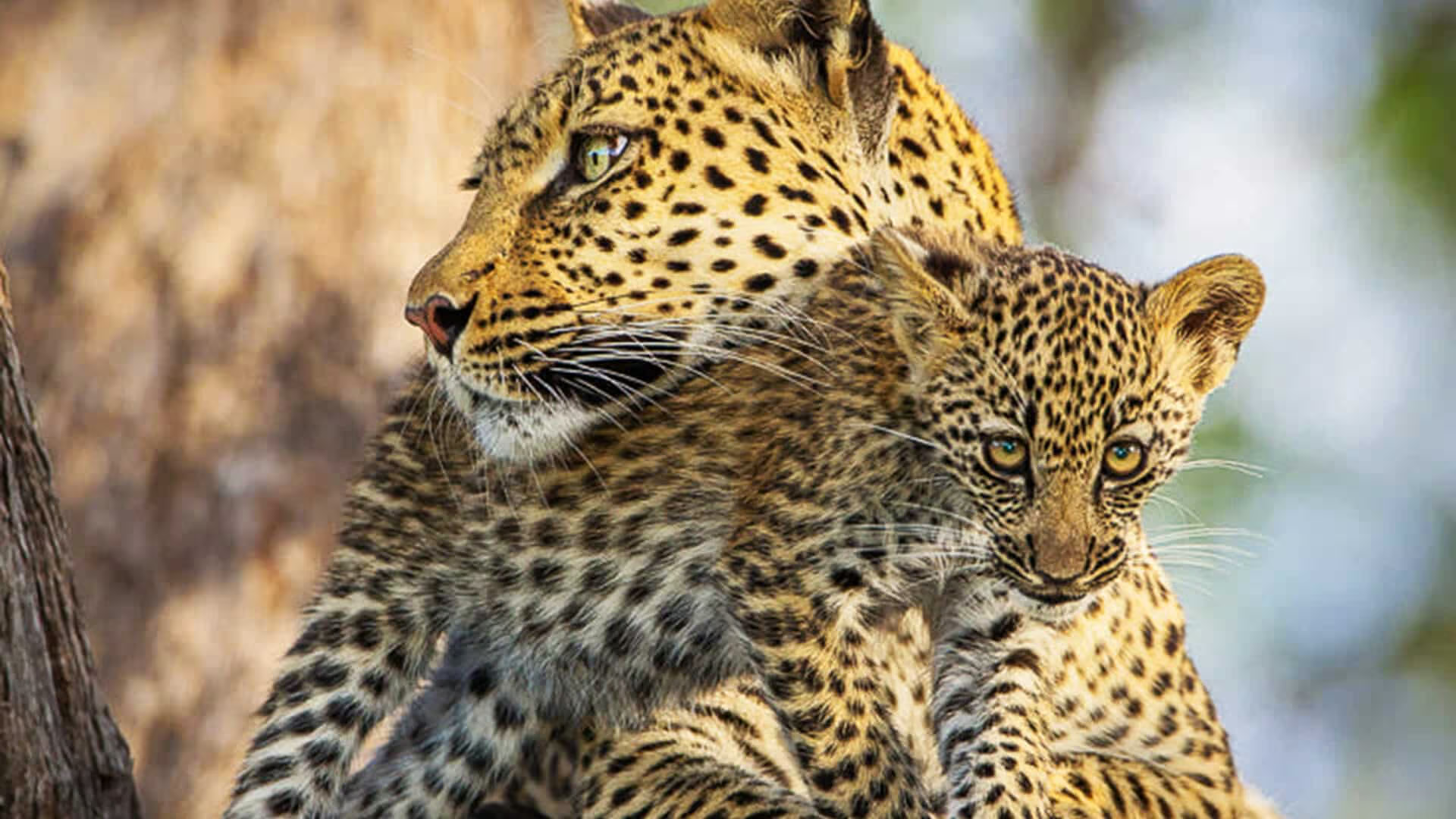
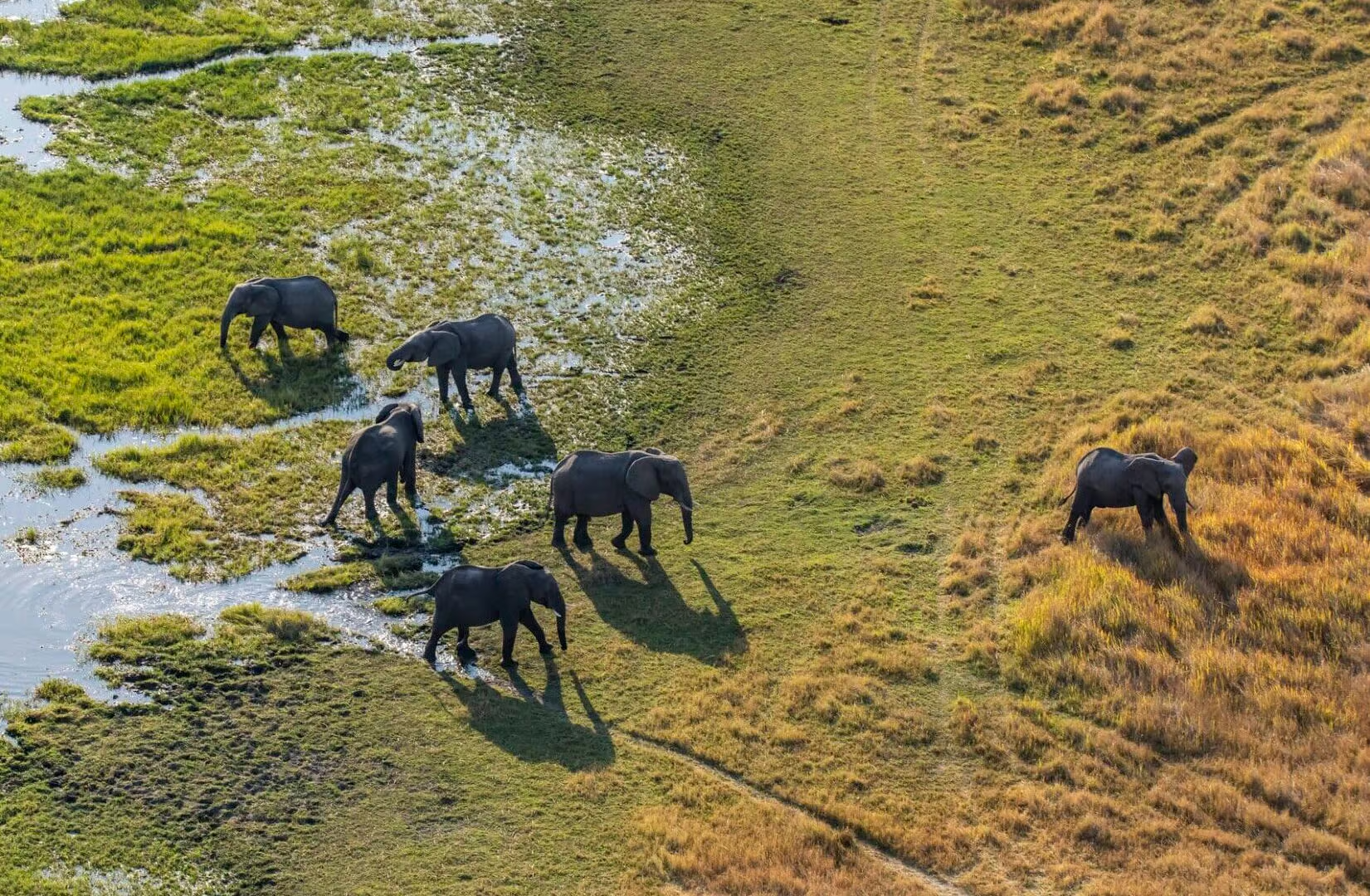
Amber Mountain Gallery
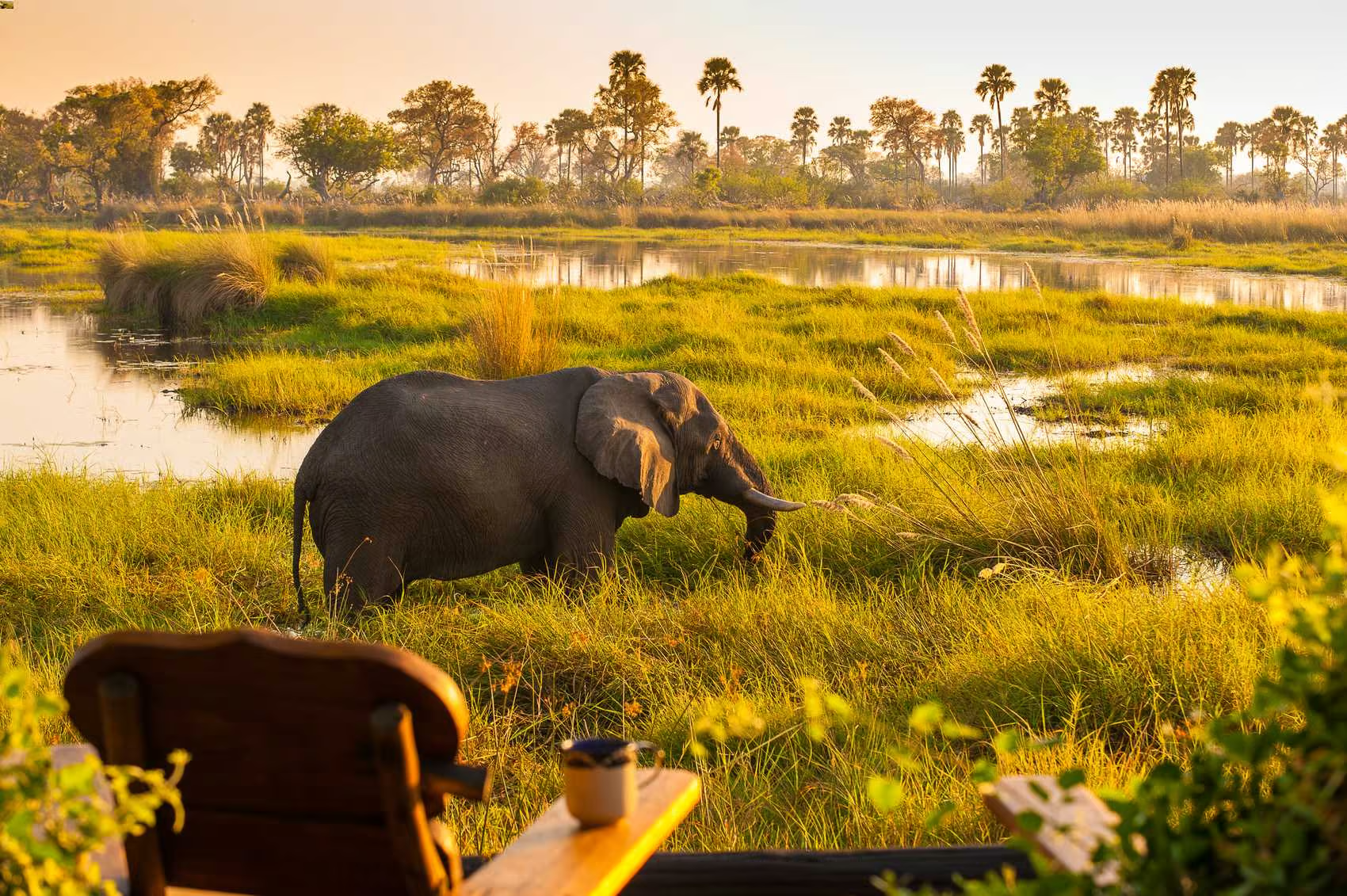
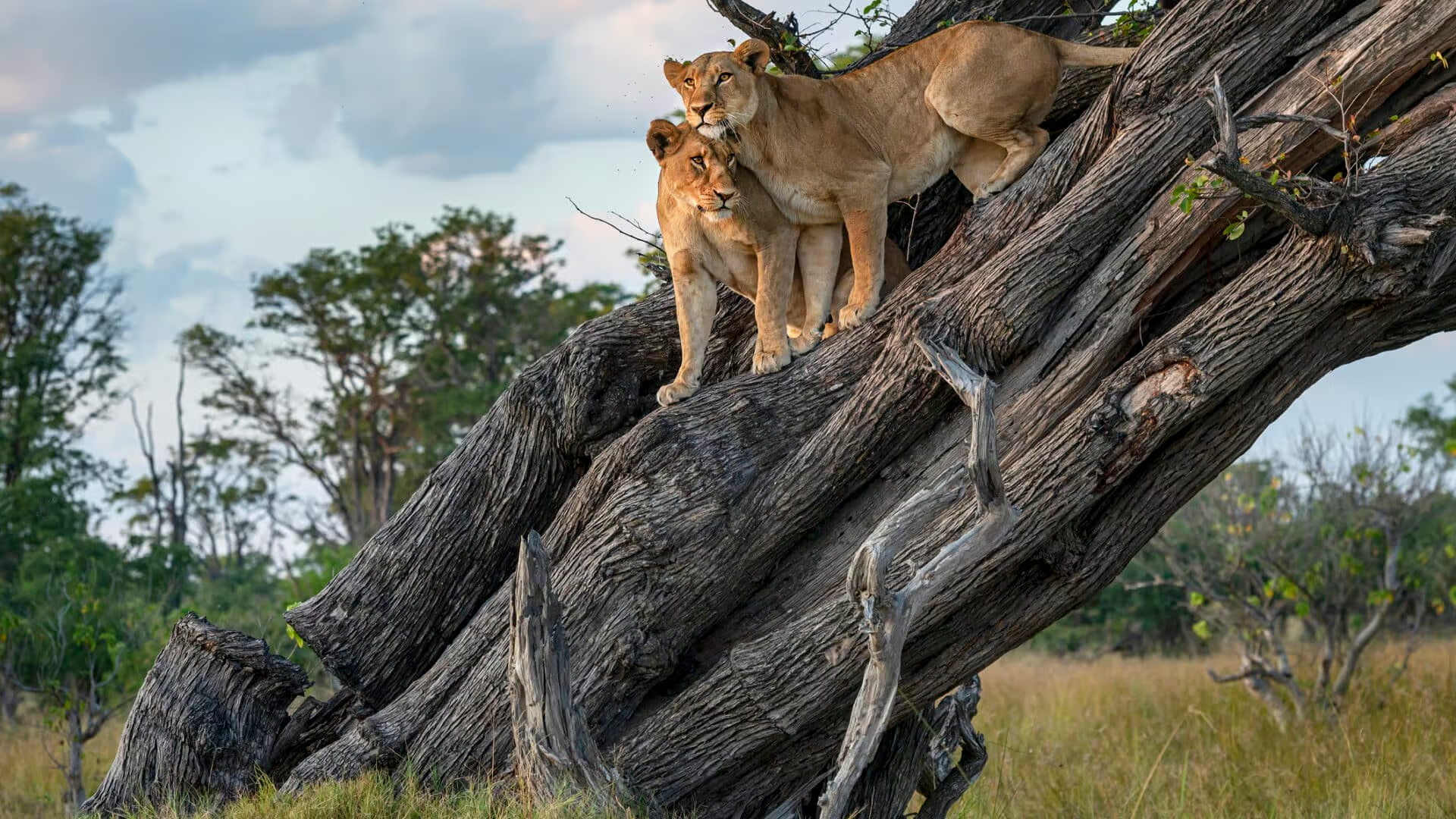
Where To Go In Amber Mountain
Amber Mountain is full of hidden gems—each valley, waterfall, and trail offers a unique way to fall in love with Madagascar’s wild heart.
Montagne d’Ambre National Park
One of the largest game reserves in the world, the Central Kalahari Game Reserve (CKGR) is a remote and pristine safari destination in Botswana that inspires a sense of freedom... ahpar1
Chief’s Island ahh2
Located in the Moremi Game Reserve, Chief’s Island is the largest island in Botswana’s famed Okavango Delta, offering travellers a truly unique safari experience in southern Africa. This landmass measures... ahpar2
Chobe National Park and Savuti Marsh ahh3
Chobe National Park is Botswana’s most biologically diverse park, meaning that it’s a haven for wildlife. This makes it a must-visit destination in southern Africa for Botswana safari goers. From... ahpar3
Khwai ahh4
Situated in the northeastern region of the Okavango and bordering Moremi Game Reserve, Khwai offers exceptional wildlife viewing and a stunning array of ecosystems to explore. From lagoons and flooded... ahpar4
Kubu Island ahh5
Kubu Island is a must-visit destination during a Botswana safari for those looking for an off-the-beaten-track adventure. Rising up from the flat landscape and among baobab trees, these granite rocks. ahpar5..
Mababe ahh6
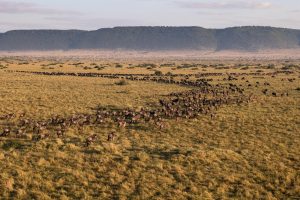
Mababe is a private sector of the Okavango Delta in northern Botswana where massive herds of buffalo stretch out over the plains and impressive prides of lions hunt their prey.... ahpar6
Makgadikgadi Pans ahh7
One of the world's largest salt flats (a flat expanse of ground covered by salt and other minerals), the Makgadikgadi Pans offer stark, breathtaking landscapes and unique wildlife experiences, including... ahpar7
Moremi Game Reserve ahh8
Moremi Game Reserve is the oldest protected reserve in the Okavango Delta and combines mopane woodland and floodplains, offering diverse habitats and rich wildlife. Some of the most endangered African... ahpar8
Nxai Pan National Park ahh9
A striking contrast to Botswana's wetland ecosystems, Nxai Pan National Park is a vast, open landscape of fossilised salt pans, grassy plains, and acacia woodlands. Located on the northern fringes... ahpar9
Okavango Delta ahh10
A UNESCO World Heritage Site and Big Five safari destination, the Okavango Delta is a highlight of a Botswana safari. The permanent swamps, seasonal floodplains, and dry woodlands support a... ahpar10
Okavango Panhandle ahh11
The Panhandle is the entry point to the Okavango Delta, offering serene waterways, incredible fishing opportunities, and fascinating cultural experiences. Stretching around 70 km (43 miles), the Panhandle is one... ahpar11
Savute ahh12
Bordering the Okavango Delta as well as Chobe National Park, Savute is a fantastic place to see Africa’s big game in action while on your Botswana safari. This region is... ahpar12
Tsodilo Hills ahh13
A place of deep spiritual and historical significance, Tsodilo Hills rises dramatically from the Kalahari Desert, creating a striking contrast to the surrounding arid landscape. This UNESCO World Heritage Site... ahpar13
Tuli Block ahh14
A lesser-known wedge of wilderness in eastern Botswana, the Tuli Block is a region of rugged beauty, where dramatic sandstone formations, riverine forests, and open savannahs create a distinctive safari... ahpar14
Best Time To Visit Amber Mountain
The months of April through November offer the clearest skies, more comfortable temperatures, and the highest chance of dry‐weather exploration.
Amber Mountain Safari in January
Typically hot and wet, January sees heavy rainfall that can make trails muddy and access tricky. Rainforest visibility drops, though the forest is lush and waterfalls are at their most powerful.
Amber Mountain Safari in February
Still in the wet season: frequent tropical showers and high humidity. Wildlife is active, particularly amphibians, but many trails may be slippery or washed out.
Amber Mountain Safari in March
Rainfall begins to taper off toward the end of the month. The landscape is saturated, and many rivers swell. Good for seeing full waterfalls, though some lodges or paths may still be difficult to reach.
Amber Mountain Safari in April
Transition month: rain lessens, humidity drops. Forest trails become more navigable. Ideal for travellers who wish to avoid peak wetness but still enjoy vivid greenery.
Amber Mountain Safari in May
One of the better months—rainfall is lower, skies are clearer, and wildlife is easier to spot. Comfortable temperatures make hiking delightful.
Amber Mountain Safari in June
Dry season kicks in. Crisp mornings, warm days; vibrant bird activity. Trails are dry and conditions are excellent for exploring.
Amber Mountain Safari in July
Prime safari month: dry, sunny, with minimal rain. Dust is low, and wildlife is drawn to water sources—great for sightings.
Amber Mountain Safari in August
Still at the height of the dry season. Excellent visibility. Slightly cooler nights; days remain warm and pleasant.
Amber Mountain Safari in September
Dry conditions continue, but temperature begins rising. Less crowded than peak months—great for those wanting serenity.
Amber Mountain Safari in October
Dry, but begins tip‑toeing toward occasional showers. Still an excellent choice: few crowds, lush scenery, but fewer logistical hurdles than rain months.
Amber Mountain Safari in November
Rain likelihood increases toward end of month. Early November is often still fairly dry; as the month progresses, showers return. Good if you prefer greener landscape with fewer tourists.
Amber Mountain Safari in December
Rain returns in earnest. Heavy downpours, muddy tracks, occasional closures. But the forest is vivid, waterfalls full—and for those who don’t mind moisture, dramatic.
Our Recommended Activities In Amber Mountain
Explore our recommended experiences in Amber Mountain and find your perfect way to connect with its natural beauty.
Chief’s Island
Moremi Game Reserve
Makgadikgadi Pans
Chobe National Park and Savuti Marsh
Khwai
Chief’s Island
Our Recommended Activities In Amber Mountain
Explore our recommended experiences in Amber Mountain and find your perfect way to connect with its natural beauty.
Chief’s Island
Moremi Game Reserve
Makgadikgadi Pans
Chobe National Park and Savuti Marsh
Khwai
Chief’s Island
Safari Lodges, Tented Camps and Villas
in Amber Mountain
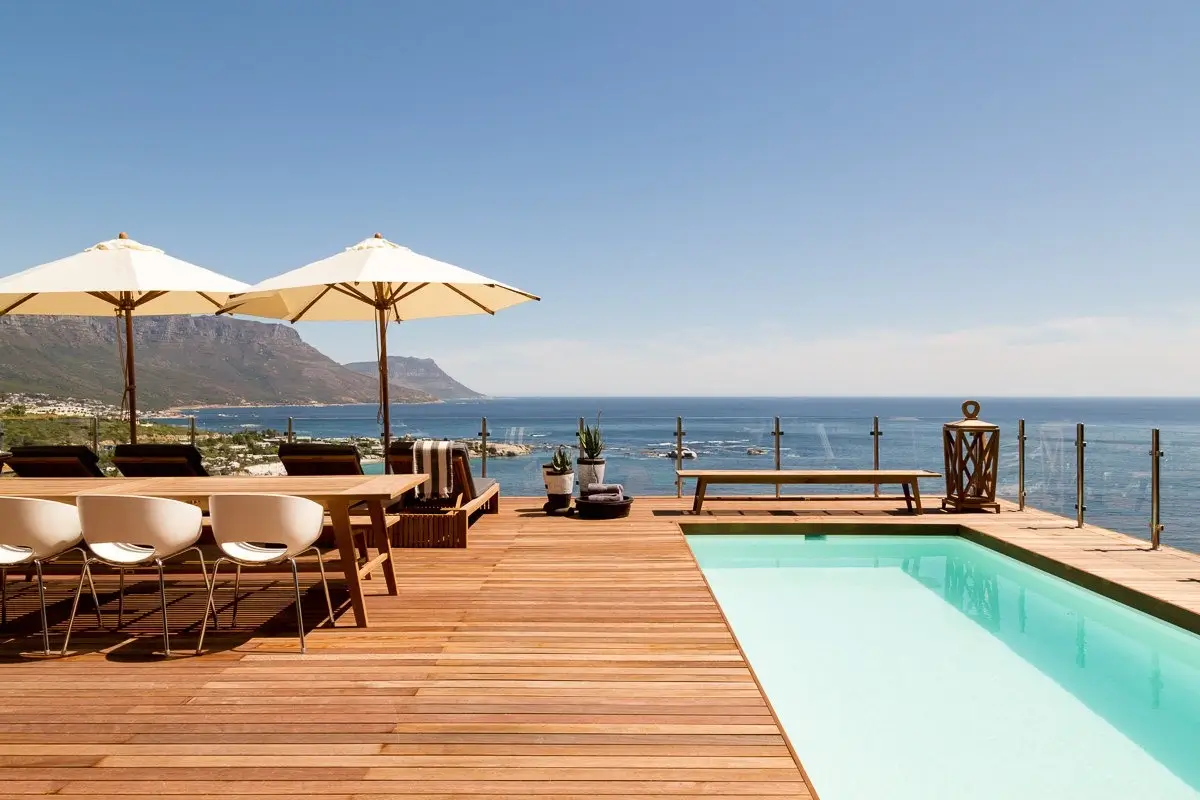
Savute Elephant Lodge, A Belmond Safari
- Botswana Chobe National Park
Belmond Savute Elephant Lodge is a luxury lodge in Chobe National Park known for its...

Luxury
African Bush Camps Atzaro Okavango Camp
- Botswana
Welcome to Atzaro Okavango, a premier safari destination that offers sustainable luxury in the heart...
Luxury
Cha Cha Metsi
- Botswana Okavango Delta
Explore our most popular safaris in Botswana and experience the magic of its untouched wilderness.cvbcccccccccccccccccccccc
Luxury
What You Need To Know About Amber Mountain Safaris
Find everything you need to know to plan your Amber Mountain adventure, from travel tips to essential insights for an unforgettable trip.
Amber Mountain Food and Tipping Practices
Cuisine in Amber Mountain typically features fresh, local produce—rice, fish, tropical fruits, and Malagasy specialities. Lodges may offer buffet or set‑menu meals depending on season and guest numbers. Tipping is appreciated: guides and lodge staff often rely on tips; a standard guideline might be 5‑10% of the daily lodge rate or a fixed amount per guest per day, depending on service quality.
Amber Mountain Food and Tipping Practices
Cost of a Amber Mountain Safari
Prices vary based on length of stay, lodge standard, season, and group size. Expect higher costs in the dry season and for luxury accommodations. Budget travellers can find modest stays with local lodges, while premium safaris with private guides and boutique lodges command significantly more. Factor in permits, park fees, transport to and from the region, meals, and tips.
Cost of a Amber Mountain Safari
Packing List for Amber Mountain
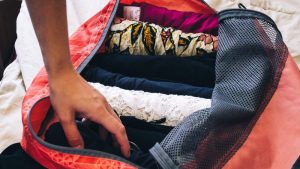
Essentials include: sturdy hiking boots, lightweight rain jacket, quick‑dry clothing, insect repellent, sun protection (hat, high SPF sunscreen), binoculars, camera, headlamp or good torch, layered clothing for cooler mornings and evenings, reusable water bottle. Also good to bring any needed medication, power bank, and waterproof bags for electronics.
Packing List for Amber Mountain
Climate in Amber Mountain
Amber Mountain has a tropical rainforest climate: high humidity, frequent rainfall (especially in the wet season), with warm days and cooler nights. In the dry season, rainfall is much reduced, skies clearer, and conditions more stable. Temperatures remain fairly constant, though nights can feel chilly in the forest.
Climate in Amber Mountain
Languages in Amber Mountain
The primary language in the region is Malagasy. French is widely spoken (especially in tourist lodges, by guides). In some areas, English is spoken to varying degrees—particularly in travel‑oriented settings.
Languages in Amber Mountain
Is Amber Mountain Safe?
Generally yes: Amber Mountain is considered a safe destination for travellers who take standard precautions. Use of trusted guides, staying on marked trails, avoiding walks alone after dark, and protecting against mosquitoes or tropical illnesses are advised. Infrastructure might be more basic in remote lodges, so expect fewer services than in urban areas.
Is Amber Mountain Safe?
What People Say About Us
We are the leading travel agency offering different programs and higher education diplomas that are designed with global requirements in mind.
Unforgettable Safari Experience!
— Jennifer L., USA
Incredible Service from Start to Finish
— Thomas K., Germany
Wildlife Like You’ve Never Seen!
— Sarah M., Australia
Perfect for First-Time Safari Travelers
— Mark & Ellie B., UK
A Dream Honeymoon!
— Nadia & Carlos R., Spain
Blog and articles
Latest travel tips and blog covering all travel experiences. Check out our mentions in different guides and articles.

Our Trusted Safari Partners in Africa
Latest travel tips and blog covering all travel experiences. Check out our mentions in different guides and articles.